Wednesday, January 31, 2007
Morocco's King intervenes in Assahifa case.
Following on from our story yesterday about the Arabic language daily Assahifa and its decision to ban itself for Tuesday's publication of an an article about an oil discovery in the eastern town of Talsint, which included statements deemed to be defamatory of the monarch, King Mohammed VI has moved fast to intervene. His decision not to allow the paper to be prosecuted is a sensible and timely act by the monarch at a time when press freedom is a hot topic in Morocco.
In a press release on Tuesday, the newspaper's managers announced the temporary suspension of the publication and apologized for the article after realizing that the letter of Michael Costin, President of the US oil company Skidmore, upon which the article was based, "include ambiguous and contradictory information, which remove their credibility."
King's decision not to sue Assahifa deemed "noble"
The Syndicat National de la Presse Marocaine (SNPM, Morocco's Press Union) and the Moroccan Federation of Press Editors (FMEJ) have welcomed as "noble" and "positive" king Mohammed VI's decision not to sue Assahifa. The two organisations have received a letter from king's advisor, Mohamed Moatassim, about the King's decision not to sue Assahifa despite "the flagrant violations of press deontology that have marred the article, which included deliberate lies."
The FMEJ noted that there is no reason to take proceedings against the newspaper after the it apologized for its professional misconduct and its decision to temporarily suspend itself.
The king's decision is "historical and unprecedented" in media-related cases, said the Secretary General of the Press Union, Younes Moujahid, in a statement to the Maghreb Arabe Presse. He went on to say that he hoped that the monarch’s “noble” decision should incite journalists to defend the freedom of speech while abiding by the rules of deontology.
Note: Deontological moral systems are characterized by a focus upon adherence to independent moral rules or duties. To make the correct moral choices, we have to understand what our moral duties are and what correct rules exist to regulate those duties. When we follow our duty, we are behaving morally. When we fail to follow our duty, we are behaving immorally. Typically in any deontological system, our duties, rules, and obligations are determined by God. Being moral is thus a matter of obeying God.
Tags: Moroccan Morocco Fes, Maghreb news

Tuesday, January 30, 2007
Moroccan newspaper bans itself!
If you thought the media in Morocco was in a mess, you could well be on to something. Hot on the heels of the international embarrassment caused by the poor handling of the Nichane fiasco and the furor over the treatment of Aboubakr Jamaï, - comes the bizarre story of a newspaper suspending its own publication.

Assahifa, the Arabic language sister publication of the French language Le Journal Hebdomadaire, announced yesterday that it was going to suspend itself temporarily. Where the idea for this strange behaviour came from is not clear, but the paper has indeed sent itself to "the naughty corner" over an article they published on Tuesday about an oil discovery in the eastern town of Talsint.
In a press release, the daily said it suspends publication for "dysfunctions in its management" and apologized for the article after realizing that the letters, upon which the article was based, "include ambiguous and contradictory information, which remove their credibility."
The daily, which had earlier promised to publish on Wednesday, "the content of the letter sent by Michael Costin, President of the US oil company Skidmore," said it has finally decided not to publish it after the Moroccan Federation of Press Editors and the Press Union denounced the article as harming "press deontology and a violation of the laws in force in Morocco."
Aboubakr Jamaï, the publisher and al-Iraqi, a journalist from Assahifa's sister French-speaking weekly “Le Journal Hebdomadaire” were sentenced nine months ago to pay 3 million dirhams (US$354,000) in damages to Claude Moniquet, head of the Brussels-based security think tank European Strategic Intelligence and Security Center. Moniquet claimed Le Journal Hebdomadaire defamed him and his institute when it published a six-page critique in December 2005 that questioned the independence of the center’s report on the disputed Western Sahara. The two journalists were also fined 100,000 dirhams (US$11,800) as part of the judgment, which observers criticized as politically motivated.
Earlier this month, Aboubakr Jamaï, resigned in a move designed to shield the magazine from the damages he was ordered to pay last year in the controversial defamation suit.
His resignation was described by the Executive Director of the Committe to Protect Jornalists, Joel Simon, "...as a sad day for Morocco, which is losing one of its best and most courageous journalists.”
In recent weeks, court officials have visited Le Journal Hebdomadaire’s Casablanca office demanding payment of the damages and fines. Jamaï and al-Iraqi remain personally liable to pay the damages awarded to Moniquet. “I have no formal way of earning a wage in this country,” Jamaï told CPJ. “Any kind of revenue or property I acquire can be seized.”
Tags: Moroccan Morocco Fes, Maghreb news
Desalination - the answer to the drought?
"The general belief that Morocco is spared from any possible water shortage, and that we can go ahead as if nothing has happened, is an erroneous and dangerous belief." - Minister Mohammed El Yazghi

Those who have been watching the ongoing debate over water shortages in Morocco will remember the Minister of Territory Development, Water and Environment, Mohamed El Yazghi, warning against complacency and the belief that water was in good supply. Minister Yazghi, a socialist, is one of the Moroccan politicians who works hard at his portfoilio and this week, back in his hometown of Fès, he took the opportunity to ram home his message about Morocco and drought.
Though possessing about a hundred storage dams, Morocco is not spared from drought or overexploitation of ground water tables and the resultant growing deficit in water resources. According to the Minister, the remedy should include desalination of seawater. He stressed that Morocco had to take advantage of the 3,500-km coasts (both the Atlantic and the Mediterranean) to secure an adequate supply of drinking water.
Desalination is not new technology for Morocco and there are already several desalination units in places such as Agadir and Tan Tan, but the minister pointed out that much could be learned from the Spanish experience, where they have boosted key-sectors such as agriculture and tourism through the development of the seawater desalination.
Morocco has also embarked on a plan to recycle water, rationalize consumption resource, preserve water quality and fight exploitation of ground water tables. A national program of liquid water sanitation and purification should be in place by 2020.
On Monday, the State Secretariat in charge of Water announced that the volume of water stored in Moroccan dams has reached 8.45 billion square meters, that is a filling rate of 53%, against 43% in the same period of last year, thanks to the recent rain-showers and snowfalls that occurred after months of drought.
Tags: Moroccan Morocco Fes, Maghreb news
Moroccan Blogs - January update.
January, after getting off to a slow start, has proved to be a really active month for the Moroccan bloggers. Some new blogs have appeared, some have fallen silent and others that had been pretty quiet, burst into life again. What is wonderful about the English language blogs in Morocco is the way they link between each other and bounce off each other's stories. The View from Fez, thanks all those new sites which have linked to us this month. We appreciate it.Once again, the top blogs were those authored by bloggers with a literary bent, journalistic background or simply those with a real eye for the off beat. Topics ranged across everything from the Saddam video and the Nichane case through to snow in Meknes and the best bottle water in Morocco (about which we, however, beg to differ!).
Cat in Rabat has been an entertaining read all month and the blog celebrated its first birthday (Cat in Rabat is 1-Year Old) as well as the Islamic new year (Party Like It's 1428 (A.H.)!) Those of us who have been following Mr and Mrs C in Rabat as they venture to get a permit to stay in Morocco were treated to the final installment (The Cat de Sejour: Part the Fourth) and after discovering that the Cat is truly evil (Vindicated!) and we held our breath as she tried in vain to watch the Da Vinci Code ( da Veni, da Vidi, da Vinci) - alas we also have to wait as it appears the Cat has yet to subject herself to that unspeakable experience.
Morocco Time continues to be a "must read", particularly as its author, Liosliath, has the wonderful gift of taking the seemingly mundane and making it really interesting. A case in point was her story on drink water. That's right. Drinking water! (سيدي حرازم ) Morocco Time obviously has shares in Sidi Harazem and sidelines Sidi Ali - "I’ll be over here drinking my tasty Sidi Harazem, reveling in my good health, while all the rest of you drink that bilge they call Sidi Ali and visit the pharmacy for anteebeeoghteeks for the tiniest sniffle." Liosliath also reawoke our interest in hiking in Morocco with a delightful post about the area around where she lives (Hiking in the Mountains ) Her post on tourists (Tourist Stereotypes) cracked us up.
Laila Lalami is one of those blogs that constantly reminds you of how many great books there are out there that you "must read" (Marjane Satrapi's Chicken with Plums), (The Virgin of Flames) just to name two. Laila has shuttled around from her base in Casa and this month saw her heading to literary events in the Netherlands (Dutch Wrap Up) and also blogging about the Nichane case (Nichane:Update) and the murder of Hrant Dink (Dink's Murder) and so much more. The question that needs to be asked is does she have enough spare time to write another novel like her superb Hope & Other Dangerous Pursuits ??? We hope so.
The Morocco Report is powering along with heaps of posts and a great mix of the local, national and international observations. Her acute eye picked up a wonderful detail in a Maroc Telecom advert (More Bad Advertising.) and she blogged the blogosphere as well (The English language Moroccan "Blogoma"). Best of all The Morocco Report tore strips off the so called experts on Morocco who write in online forums such as Thorn Tree (Debunking Morocco's "Expert Advice") - "I've got to say, I'm quite tired of Morocco "experts." This is a class of people - some of whom are foreigners, others are Moroccans, most often with little grasp of English beyond "You are welcome in Morocco," but all of whom think they know it all and most certainly do not." - We couldn't agree more.
My Marrakesh and its author "Maryam in Marrakesh" - what can we say? Apart from the fact that she has changed the look of her blog, she continued to have her readers mouths watering at her lush pages, beautiful eye for colour and composition in photographs and a cheeky turn of phrase that might have you imagining she is going to leave her husband for a furniture designer Alberto Pinto, (Morocco and a love unrequited) or that she is a secret stalker (Moroccan Proclivities.) To top it all Maryam's blog has deservedly been shortlisted in the 2007 Blog Awards. (Morocco: And brazen hussy). You can ( and should) vote for My Marrakesh here.
Of the specialist blogs that concentrate on things such as renovation of riads in the Fez Medina, the two that consistently get the most visits from our readers are:
Louis Fes: Louis writes really interesting reports on the trials and tribulations of restoration.
Dar Mystere: Again a renovation blog with some really interesting photographs
The blogs by those outside of Morocco have also been interesting and we would like to salute those who have entertained, educated or engaged us this month:
Eatbees: Always fascinating and with great analysis.
The ala Menthe - You will never miss a story if you check in with Bill.
Refusenik: Farah Kinani is a wonderful blogger who comes up some very touching posts.
BO 18 - is a young blogger based in London and although reasonably new to the Moroccan blogosphere, is one to watch.
Morocco Savvy is a very new blog about tourism in Morocco and it will be interesting to see how it fits into the existing networks. It is certainly off to a good beginning.
Tags: Moroccan Morocco Fes, Maghreb news
Monday, January 29, 2007
Morocco Report's big book search continues.
The Meknes ALC is trying to acquire a bunch of paperbacks for our student library, but before we go and buy new ones and pay exorbitant shipping and customs, we were hoping there would be some people in Morocco with extra books lying around that might want to send them our way (or if they're in Fez, I'd be happy to just come pick 'em up). If anyone does have some books , please contact me via ArtiZany for instructions. Thanks!
You may have seen the advertisement ( above) on our sister blog ArtiZany - well, we decided to do an update and check how things were going with the big book search.
According to the Morocco Report - "The American Language Center of Meknes' students are faced with an extreme dearth of English reading materials, making it nearly impossible for them to improve their reading skills in English. Given the recent error of Maroc Telecom (see "Phony" article in my blog!), English skills are of growing importance in Morocco, in all industries."
TVFF: Why did you ask for donations of books?
MR: Why are we asking for donations? Well, the entire city of Meknes (population somewhere between 600,000 and one million) has three good but small bookstores, and those three bookstores probably have about 15 English books between them. Our school has a budget, but not for a library, and we're going to have to spend a ton renovating a space to make a library anyhow, so I volunteered to acquire some books.
TVFF: So how has the response been?
MR: I've "secured" about 300
TVFF: That's a great start...
MR: I've been loaning books out from my 20-book bookshelf for over a year and to secure several hundred additional books after quick jaunt 'round the blogosphere is AMAZING! Mind you, we're hoping to have around 1,000 to justify turning a classroom into a library, but holy crap, what a start!
TVFF: What kind of books are you after?
MR: Any used books. Adolescent/pre-adolescent genre fiction, adult genre fiction (sci-fi, crime, "chick lit"), biographies, nonfiction related to business or computing, grammar books, young adult fiction, children's books.
So, if you can give a hand and donate some English language books, please email us and we will give you a postal address for donations. Email us at ArtiZany@gmail.com
Tags: Moroccan Morocco Fes, Maghreb news
Sunday, January 28, 2007
Morocco's regional airlines - on the web.

So many people who fly into Morocco for a holiday are unaware that there is now a well developed network of flights around the country. For those on a limited time schedule, flying between cities is a much better option. For example, why spend nine hours on the train when a short flight will get you from Fez to Marrakech.
The flights service Fez, Tangier, Agadir, Dahkla, Al Hoceima, Casablanca Errachidia, Essaouira, Laayounne, Nador, Marrakech, Ouazazarte and Tan Tan.
There are also some very handy regional connections to the Canary Islands, Lisbon, Malaga and Valencia.

The website is modern, smart and easy to use - as long as you speak French. French? Yes, once again a Moroccan tourist website has failed to grasp the fact that the biggest growth area in Moroccan tourism is English speaking. I should, in their defense, point out that they do have a link to an English and Spanish page - but no such page is actually there. Ho Hum... with the new tourist season about to start, we hope they get their act together a little faster than is usually the case. Trying to get the English and Spanish sites up before 2010 would be a goal worth attaining.
You will find the site here: Regional Airlines
Tags: Moroccan Morocco Fes, Maghreb news
Saturday, January 27, 2007
The confusion of a long distance Moroccan. Part two
 Mystery man?
We don't have any information at all and we are unable to communicate in any way with the defendant before you - Solicitor Stephen Lloyd
Following on from our story yesterday about identity and nationality, I want to take you back to October last year when a small newspaper in Wales broke the story of a mystery man who had been arrested two weeks previously for trespass and burglary.
The local Magistrate was told that the authorities had no idea of his name, age, nationality, or even his language. The court at Llanelli, Carmarthenshire, was told he had broken into the same house three times, washed himself and cooked food, and stole a sewing kit. The man - referred to as the prisoner or defendant - was remanded in custody as no plea could be taken. Laura Carthew, prosecuting, said police had tried every means possible to identify or communicate with him. "A map of the world has been offered to the defendant with no response," she said and added that they had also presented him with flags from all the countries in the world, but this met with a similar response.
The man did break his silence once and spoke briefly in a language thought to be Amharic, but when a translator was called they said they did not understand him and had no clue to the dialect he was speaking. All of which was a bit of a problem for his lawyer, Stephen Lloyd, who said: "We don't have any information at all and we are unable to communicate in any way with the defendant before you."
The man, who appeared to be in his 30s with dark receding hair and olive skin had his fingerprints checked against the national database and the immigration records, to no avail.
The breakthrough in the case came more than a month later, after the case was transferred to the crown court as the man could not give his consent for a summary trial. An interpreter heard of the story on local TV and recognised that the prisoner was speaking a Berber language.
During his subsequent trial an amazing story emerged. Hassan Ibrahimi had left his remote Moroccan village to find work after an earthquake destroyed his home and killed his parents and brother. Working night and day in a restaurant, he raised £1,000 which he paid people-traffickers to smuggle him on a plane to France, where he thought he could get work. Instead, the traffickers dumped him out of a truck, without food or money in the Amman Valley in Wales. To add to Hassan's problems, the small town of Tycroes, where he found himself, is Welsh speaking!
Unable to speak Welsh or English and without money, Ibrahimi initially made a den in a hedge, but when he became cold and hungry he broke into a nearby house, taking groceries, clothing, a sewing kit and a toothbrush. On two other occasions, he returned to the same house. On one visit he was came face to face with the 65-year-old owner, who was so scared he went to stay with his brother nearby to recover - eventually he called the police.
In court, Llanelli magistrates heard he had been desperate for food and shelter, but said the offence was so serious only a custodial sentence would do. Hassan's solicitor Mike Reed had asked the court to conditionally discharge Ibrahimi. "This is a most exceptional case and I would ask you what you might have done in a similar situation," he told magistrates. He said his client had been interviewed yesterday by the immigration services and wanted to claim asylum.
But the magistrates ruled Ibrahimi came from a different continent, had no connection with the UK, could not speak the language, would have nowhere to stay and would be likely to re-offend when released. They said the time he has spent in custody since his arrest on 24 September would be taken into account.
The north African Berber tribesman launched a successful appeal that saw his 12-month jail term halved and he was freed from prison within days and was expected to meet immigration officials
However, just last week, he vanished without a trace. Immigration officers, who have stressed he is not a wanted man, said: "We were told of his successful appeal, but we do not know where he is," said an Immigration spokesman. "He has claimed asylum and his application is being looked at by the Home Office."
So today, spare a thought for Hassan and let's hope he is found and even more that he finds what he has worked so hard for. Ishallah.
See "Confusion of a long distance Moroccan - part one."
Tags: Moroccan Morocco Fes, Maghreb news
Hiking and Climbing in Morocco.
Yesterday's story about exploring the hills around Fez on a mountain bike started me thinking about all of the outdoor activities that tend to be forgotten when you are snowed in in your riad. Our blogger friend Liosliath has also been thinking of the mountains and has a story of hiking up the road from her valley. There is a link to her story at the bottom of this post.
There are hundreds of places for climbing, trekking and even rafting, but here is a sample to give you a taste of what Morocco has to offer.
Biking is superb in Morocco and our pick would be the ride from the Todra Gorge to to the Tamatattouchte Pass and a great downhill run to the village of Msemrir. Then, from the Gorge du Dades to the village of Bou Thar. Bike tour operators will arrange transfers to most hotels in the region, for example it is possible to bike the zig-zag from Bou Thar to the head of the valley, followed by a downhill run to where you can be transfered to the Boulmaine Dades Hotel. One tour organisation does ten to twelve day trips, others offer shorter versions. With your own arrangements you can work out an itinerary that fits your budget and time.
Great places for Trekking.
FROM FEZ
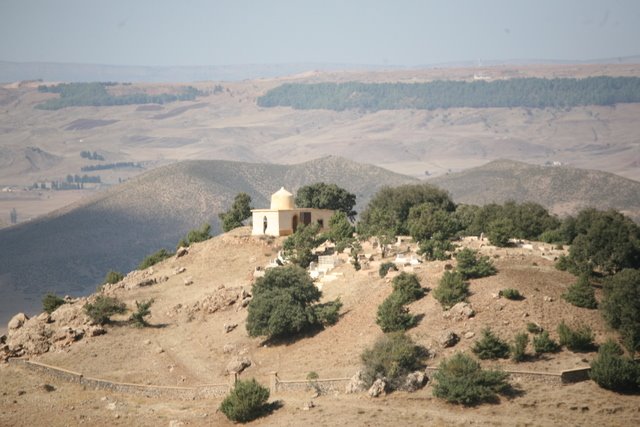
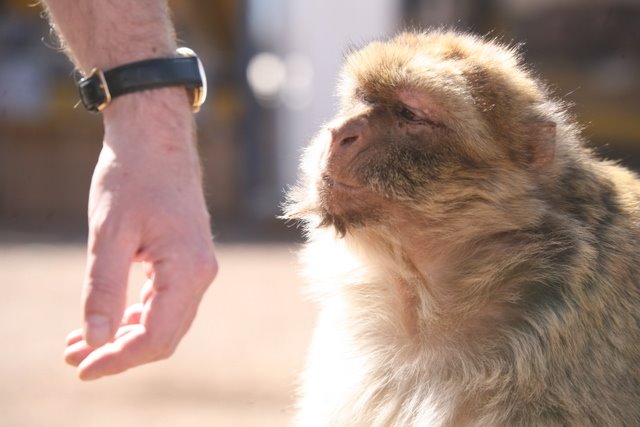
There is a great four and a half to five hour trek which starts from Azrou (where they hold the tuesday Souq) . The first destination is the summit of Ras Kharzouza (1900 m) which you reach by way of some beautiful juniper, oak and cork forests that give way to cedar at around 1600 m. From the top of Kharzouza there is a spectacular view out over the Tigrigra Valley, Azrou and the village of Ain Leuh. The best descent is down the other side of the mountain, through Tizi Tioumliline and on to the track beside the Oued Sebbab that leads you back to Azrou. A word of warning - don't feed the Barbary Apes! I have had one launch itself onto my back and this is not an experience to be recommended.
 Friendly local checks the time
Another five hour walk starts from Sefrou. If you want to spend time in the souq there, the market day is Friday. The best route for a trek here takes you from Sefrou to the tiny town of Bhalil some one and a half hours away. Bhalil is an ancient Christian city founded by Roman soldiers who had opted out of the Second Legion - or so the story goes. But more astonishing is the present day reality that just behind the village are a few dozen families living in caves. Yes, modern day troglodytes. The walk continues through some beautiful scenic spots and plenty of wildlife in a slow circle down to the starting point at Sefrou.
FROM MARRAKECH
The pick of the High Atlas trips starts from the Bou Guemmez Valley, heading south-west through Berber villages and astounding scenery to three of the highest peaks in the Atlas - Mgoun (4069m./13346ft), Ouanoukrim (4088m./13408ft) and Jebel Toubkal (4167m./13668ft). Starting point in Morocco for this trip is Marrakech and unless you are a very experienced trekker or climber, I would suggest hiring a local guide. There are now some package tours that also give you a chance to climb Toubkal in winter. This is not a particularly difficult ascent although keeping an eye on the weather is a must and I would suggest throwing in an ice-axe and crampons!
In between the High Atlas and the Sahara, is Jebel Sahro range. This is a fabulous area for climbing and trekking in the winter months. The best way in is via Ouarzazate on the south side of the Atlas. There are dozens of relatively easy walking paths between the Berber villages, however, local knowledge is a must, so again, get advice from a local guide. The highest peak here is Amalou n'Mansour (2712m./8895ft.)
As a base camp for trekking or climbing near Toubkal, we recommend Dar Tassa. You can find out about them via email: info@dartassa.com
Read Liosliath's story here.
Tags: Moroccan Morocco Fes, Maghreb news
Friday, January 26, 2007
Snow in Fez.

Our special affairs editor, Lumen, couldn’t believe her eyes this morning – those looked like awfully large raindrops falling very slowly … Once she’d got her contact lenses in, she could see they really were snowflakes.
That’s the problem with living in a riad – it snows inside your house! In a taxi mid-morning, she could see a sprinkling of snow on the hillside up to the new city, and a thick layer of snow on some of the cars. Kids in the medina scraped snow off the cars to make snowballs.
The airport was closed due to 10cm of snow on the runways – flights from the UK and elsewhere were diverted to Marrakech and Casablanca, and hundreds of tourists bound for Fez were stranded. By mid-afternoon it had all melted in the city, but Mount Zalagh had a pretty coating of white.
The grammar of snow.
Later on in the afternoon, English classes at the American Center were disrupted by students exclaiming at the snow falling again: no, it’s not ‘it snows’, but ‘it is snowing’ – present continuous.
Although it’s extremely cold, it’s unlikely that the snow will settle in the city streets, just on the mountains surrounding Fez. It’s about -2 degrees C tonight. And quite a few of those tourists are expecting a pleasant sunny time in Africa, with the chance to catch a tan on the roof terrace of their riad.
The weather for the next week looks bleak - between 3 degrees Celsius and 16, with showers and maybe, just maybe, more snow.
PS - Oh, I know you are just busting to know if it also snowed in Meknes. Well, the answer is here! The Morocco Report who also has a very fine round up of Moroccan blogs.
Tags: Moroccan Morocco Fes, Maghreb news
The confusion of a long distance Moroccan.
 How important is national identity? It is always interesting to read the blogs of Moroccans who have started a life in a new country. Sometimes, and for some people, the distance from their homeland brings out a craving for all things Moroccan. For other people Morocco is simply the place they came from and their interest appears to be more intellectual rather than emotional and their interests gravitate around news stories, literature music and film.
There are few instances when someone writes of the confusion caused by dislocation - something this must also play a very large part in notions of identity and self-worth.
Recently, BO18, a young Moroccan blogger writing from London, posted about his sense that his "Moroccan" self was vanishing, or at least, not as strong as it had once been. What is really interesting about this piece, is the very positive conclusion he comes to.
"I was thinking that I can hardly call myself Moroccan anymore. I dont know how to make briouat anymore, my Darija is lousier than that of a baby and gossip Maroqui irritates me (gossip maricón is still ok)Besides that I just don't feel really Moroccan. I havent been to Morocco for 6 years, I shunned it for its ignorance and other reasons.
My reckless idealism decided to play tricks on me and telling me that I should shun Morocco for its backward culture and politics. So I did. Let me clarify the "backward culture" stance. I regard every culture or state as backward when religion and modern conservatism are playing a major role. And sadly in Morocco, modern conservatism is on the rise (from hear-say that is).
I'm all pro global and globalized culture. But we all know that the globalized culture is failing somehow. We're still global but regional global. We all, eventually, fall back to "our" region. In my case that would be both Morocco and the Netherlands, like all other second generation immigrants. But as you kind of guessed, it would be like that but it isn't. In my case its nothing. I'm regionalless (thats a real word as well and thats a fact!) Another sign that my "Moroccanness" is failing.
And you know what? I'm actually proud of it. It takes alot of practice and time to dispose yourself of the cultural shackles. Its just that you feel naked afterwards, but I don't have problems with feeling naked."
Read the post here: The Moroccan Touch.
See also the strange story of identity here: The confusion... part two
Also of interest: Eatbees, who feels, you should be proud of losing your identity so you can better define yourself. Read his piece on loss of identity.
Tags: Moroccan Morocco Fes, Maghreb news
CYCLING IN FEZ
If you are a regular visitor to Fez, or maybe you live there, you will be aware of the mountains that provide such a gorgeous backdrop to the Medina. But as you have looked up at Mount Zalagh, have you ever wonder what it’s like up there? Ever thought of finding out?Now you can. Pierre of Maroc Ecotourisme has imported a range of mountain bikes and ‘hybrids’ (bikes that can be ridden on roads as well as a bit of off-road), and they’re available to hire. As is he. Years of experience in the travel industry and in Morocco means that Pierre is an excellent guide. He not only knows everything about mountain biking, but will point out interesting rocks, plants and trees. He’s has a wealth of information about the area around Fez as well as further afield. And he can fix a puncture, as Patrick Ranger found out. Here is his special report.
 Patrick Ranger & Mt Zalagh
“The mountain biking was a highlight of my trip as it really felt as though you could have been anywhere in the world. The farmlands of Mount Zalagh and Mount Tghat were spectacular although badly in need of some rains. I had no idea how big Fez really was and how the King's own farm takes up a huge amount of land...well irrigated land I might add!
 The top of Mt Tghat
At times, it felt as though I was cycling around Table Mountain (I’m from Cape Town) as we were in amongst pine trees and big granite rocks. The geography changed all the time and it wasn't ten minutes before you were dodging a sheep or jumping over an olive branch! Some of the climbs were pretty hectic as the ride we did was not for beginners.
 Down Mt Tghat
There are several different routes to take so there is something for everyone and Pierre is a good leader. He knows a lot about the landscape, wildlife, history of Fez and the skiing that can be done in the high Atlas. I would recommend getting a bike with front suspension as it does get pretty bumpy, and not cycling in cleats as you do stop a lot and have to put your feet down. Some of the more advanced route is very technical and can present a good challenge.
 Tghat Forest
Lunch isn't provided so take a sandwich and some fruit, and plenty of water. It does get pretty hot up there despite the winds and the cloudy sky. Sun cream is also a must as are a good pair of sunglasses with good lenses to protect your eyes from the glare. Apart from that, it's a blast. Some of the downhills are awesome and you can get up to speeds of 60km/h! Just hold on tight!”

Bike hire ranges from Dh130 to Dh180 per day, depending on the bike, and includes a helmet. Normal pedals available if you don’t have cleats. Guide rate for Pierre is Dh250 per day.
www.marocecotourisme.com
Tags: Moroccan Morocco Fes, Maghreb news
Thursday, January 25, 2007
The Maghreb - unified by bloggers?
It is interesting to scan through the growing number of blogs emerging from the Maghreb and realise that while the political leaders struggle with the notion of a Maghreb Union - that in some respects young bloggers are making it a reality.
The bloggers from across the region are reacting to many of the same issues, listening to the same music and sharing the same videos. They are reading each others blogs and in many cases, responding to each other. Borders? What borders? The blogosphere knows no borders and when a Tunisian blogger posts about jailed writer and lawyer Mohammed Abbou, who is currently serving a three-and-a-half year prison sentence for criticising Tunisian President Ben Ali in an article, the discussion is had across the region. Another recent example was the Nichane case which was taken up by bloggers with far more energy and insight than most of the local media.
The online Magharebia magazine alluded to this when it gave examples of blogger reaction to the rising Islamic fundamentalism in the Maghreb. The analysis by bloggers is often disturbingly penetrating and more open and informed than many newspaper reports.
 Hamza Belloumi, writing in his blog Islamiqua under the banner pictured above, is quoted in Magharebia - "the recent dismantlement of the terrorist Salafist group in Tunisia shows that the Maghreb is more and more becoming a field of action …a hidden base for … Al-Qaeda." He said the recent alliance between the Algerian terrorist group GSPC and al-Qaeda is responsible for this situation.
Now, what matters here is not so much that you agree or disagree with Hamza, but more that you are involved in the discussion. You are being asked to think about something more important than the latest Haifa Wahbi pictures or a new ringtone.
Another example given by Magharebia is the blog from Tunis of "Big Trap boy" - writing on his blog Extravaganza! he has a head on go at radical ideologies, arguing that even though ...they are nonsense, most young people enlisted in those groups do not understand the ideological source of what is being preached, they behave as if that was the true Islam … and the reasons that make young people drown even further in the radicalism are well known: little bit ignorance, little poverty, little repression, little politics, ... little media … poor them, they have shortened their lives and those of others for no reason.
"I have the impression that my country is invaded by wolves, come to take possession of our districts, one after the other, of the poor districts and the rich districts."Citoyenhmida in Casablanca reacts to the rising tide of what young Moroccans call "the bearded ones" by describing them as wolves. LES LOUPS SONT ENTRES DANS CASA He adds that this impression grew stronger after the Nichane case, in which "some young inexperienced journalists concocted a pleasantry of jokes about institutions, family, religion, and which turned into tragedy for them, and into strong hold for the wolves … and into lamentable farce for the authorities who did not know what to do. "
And the outside world is listening.
In his beautifully thought out and intellectually stimulating blog, Eatbees brings together the thoughts of other bloggers with his own analysis in a way that expands our understanding and prompts deeper reflection. For example in a recent article The Price of Freedom, he reflects on the case of Boubker Jamaï, the founder of Le Journal Hébdomadaire who was fined $350,000 which he is unable to pay. Eatbees examines why his case has attracted less attention than that of Nichane. "Let us be clear that Boubker Jamaï is not going into exile for any single scandal. The “case” against Le Journal has been building for a long time. Le Journal is, quite simply, the most credible news source in Morocco. It and its rival Tel Quel are effectively the only independent news sources in Morocco."
Right and wrong - I would argue, that for those who know where to look, news can come from other sources than the print media or radio and television. Increasingly the realm of bloggers is a source of news. The bloggers are speaking out and we should all be listening.
Tags: Moroccan Morocco Fes, Maghreb news
The death toll on Moroccan roads - a huge problem
Last year the death toll on Moroccan roads was particularly bad and sadly this year may be worse. The government are clearly worried by the social and financial impact and are bringing in new laws to try and get the accident rate under control. At present, more than 3,800 lives that are lost every year due to traffic accidents and and far greater number of people survive but with medical problems that will remain with them all their lives. The impact on families can be devastating. The financial burden on the country is now above 1.2 billion USD which is 2.5% of the country’s GDP
One option that is being discussed in parliament is huge fines and even prison sentences for those who do not respect the road code. But clearly driver education and policing will also have to be drastically improved.
2007 has not got off to a good start. Yesterday five people killed and twenty injured in Marrakech when a coach collided with a semi-trailer transporting sand. The victims and the injured were taken to the city's main hospital.
On Wednesday, four people were killed and six injured in another road accident that took place when a truck collided head-on with a car on the road between Tangiers and Oujda. On January 8, nine people were killed and 24 others were injured, including 11 seriously, after a coach overturned near Taza in the north east. Two days earlier, another accident near the central town of Sidi Kacem claimed the lives of seven people, including three children and a woman.
Tags: Moroccan Morocco Fes, Maghreb news
Kasbahs, Mint Tea and Medinas
Kasbahs, Mint Tea and Medinas is a writing study tour of Morocco.
Writing Workshop Details
Morocco Study Tour with Beth Yahp and Sandy McCutcheon
23 March – 9 April 2007
Workshop #1A (Casablanca): Introduction to the tour
and Morocco, with our special guest, Moroccan writer
Laila Lalami.
Workshop #1B (Tangier): Theme: Arrivals/ Beginnings;
the Writer's Journal revisited: using your five
senses; Description: Taking a Word Picture.
Workshop #2 (Fez): Theme: The Spectacle, the Art of
Café-Sitting; Capturing a Place in Action; Writing a
Scene; getting under the skin of a place and people.
Workshop #3 (Fez): Theme: Interactions;
Culture/difference; Point of view/ Worldview; Writing
across Borders & Mindsets; mini-journey exercise).
Workshop #4 (Fez): Theme: Special Interest Features:
Writing About Food/ Art/ Craft etc. Finding the focus
that drives a story; How to Travel and Research;
Selection.
Workshop #5 (Fez): Theme: Spirit Places, Spirit
Electricity; Place & Creativity, using vulnerability;
the ethnographic essay; practicing creativity while
you travel and at home.
Workshop #6 (Fez): Music and the Muse: listening &
dialogue; rhythm & music in writing
Workshop #7 (Fez): Theme: Journeys: Melding the Inner
and Outer; Mapping Space & Time, Movement and
Experience; Focus and Trajectory in your writing;
Plot.
Workshop #8 (Marrakech): Theme: Practicalities:
Writing Practice, from first draft to publication;
Writing for an audience; Publishing advice.
If you are interested please contact fes.riad@gmail.com before February 5. Places are limited.
Tags: Moroccan Morocco Fes, Maghreb news
Writing Workshop Details
Morocco Study Tour with Beth Yahp and Sandy McCutcheon
23 March – 9 April 2007
Workshop #1A (Casablanca): Introduction to the tour
and Morocco, with our special guest, Moroccan writer
Laila Lalami.
Workshop #1B (Tangier): Theme: Arrivals/ Beginnings;
the Writer's Journal revisited: using your five
senses; Description: Taking a Word Picture.
Workshop #2 (Fez): Theme: The Spectacle, the Art of
Café-Sitting; Capturing a Place in Action; Writing a
Scene; getting under the skin of a place and people.
Workshop #3 (Fez): Theme: Interactions;
Culture/difference; Point of view/ Worldview; Writing
across Borders & Mindsets; mini-journey exercise).
Workshop #4 (Fez): Theme: Special Interest Features:
Writing About Food/ Art/ Craft etc. Finding the focus
that drives a story; How to Travel and Research;
Selection.
Workshop #5 (Fez): Theme: Spirit Places, Spirit
Electricity; Place & Creativity, using vulnerability;
the ethnographic essay; practicing creativity while
you travel and at home.
Workshop #6 (Fez): Music and the Muse: listening &
dialogue; rhythm & music in writing
Workshop #7 (Fez): Theme: Journeys: Melding the Inner
and Outer; Mapping Space & Time, Movement and
Experience; Focus and Trajectory in your writing;
Plot.
Workshop #8 (Marrakech): Theme: Practicalities:
Writing Practice, from first draft to publication;
Writing for an audience; Publishing advice.
If you are interested please contact fes.riad@gmail.com before February 5. Places are limited.
Tags: Moroccan Morocco Fes, Maghreb news
Wednesday, January 24, 2007
English, the language of death?
For those of you who have been following the debate about the need for an English language portal on the web for Morocco, will be dismayed by the information we have for you today. What we are presenting was intended as the final word on nutrition and health, and, while it is a relief to know the truth after all those conflicting medical studies, the conclusion should come as a warning to us all.
FACTS
1 Japanese eat very little fat and suffer fewer heart attacks than the Aussies, British or Americans.
2 Mexicans eat a lot of fat and suffer fewer heart attacks than the Aussies, British or Americans.
3 Africans drink very little red wine and suffer fewer heart attacks than the Aussies, British or Americans.
4 Italians drink large amounts of red wine and suffer fewer heart attacks than the Aussies, British or Americans.
5 Germans drink a lot of beer and eat lots of sausages and fats and suffer fewer heart attacks than the Aussies, British or Americans.
CONCLUSION
Eat and drink what you like. Speaking English is apparently what kills you.
Tags: Moroccan Morocco Fes, Maghreb news
Rabat - the centre of the Universe?
Several of the fine citizens of Rabat have been quick to express their disquiet and displeasure at the amount of attention Meknes has garnered on these pages in recent days. "Unfair," they cry "Rabat deserves your gaze." Oh does it? I would have thought the attention paid to Rabat by a certain feline, the highly talented Cat in Rabat, would have been more than enough.
When I emailed one of our correspondents and suggested they visit the cat, they replied that they already did so, but wanted more. "Remember, Rabat is the center of the universe" - I was told. Well, having noted the American spelling of "center", I was on guard. Was this the Rabat tourism authorities, or blog police?
Anyway, out of fear of never being able to visit Rabat again, I can offer you the glowing description by writer Carola Frentzen - Strangely, she titled her pieceDuck in for Rabatseason.

WHEREVER you go in Rabat the scent of mandarin blossom hangs in the air, especially in the Andalusian Gardens near the kasbah.
In this enchanting area, laid out by the French, the trees are laden with fruit.
The old quarter of Rabat may be less picturesque than the one in Fez or Marrakech, but it has its own flair.
Only a handful of tourists venture into these narrow streets. When exploring this north African country, most visitors plan just a brief stopover in Rabat, unaware that this city of 1.6 million people has more to offer than the famous Hassan Tower.
The watchtower built by Sultan Yacoub al-Mansour at the close of the 12th century is Rabat's major landmark.
Along with the remains of the mosque, it stands close to the mausoleum of Mohammed V, a rather grand and pompous historical ensemble typical of this country.
Rabat is one of the four imperial cities along with Marrakech, Fez and Meknes.
They have been home to the sultans and kings of Morocco down the centuries, with the result that these settlements have developed into genuine metropolises while retaining much of their antique charm.
Quite apart from its tourist attractions, though, the centre of Morocco's capital exudes a serene, sublime atmosphere.
Another attraction is the richly decorated Oudaya Gate at the entrance to the kasbah of the same name. It dates back to the 12th-century Almohad rulers.
An evening visit to the Dinarjat restaurant in the Medina is another must.
The reputation of this venue as a major meeting point for gourmets has even extended as far as Casablanca, 80km south.
Guests are picked up by a staff member at the entrance to the kasbah before being guided by lantern-light through the labyrinth of narrow streets to the entrance of the eatery.
Behind the door of the city's old palace lies a whole Moroccan world to be discovered, with traditional live music and elegantly dressed waiters under tall archways and intricately carved ceilings.
Last, but not least, there is tajine the name of a delicious stew and the conical, covered clay pot used to bake it.
And there are plenty of other delectable Moroccan dishes on the menu of this establishment, too.
Tags: Moroccan Morocco Fes, Maghreb news
Tuesday, January 23, 2007
Feeding the news hungry in Fez, Morocco.
Our Special Affairs editor, Lumen, was musing out loud the other day about how difficult it was to get news in English. And a lively discussion ensued - the gist of which was that we need an English language daily in Fez - or a weekly.
Of course I pointed out that as far as news went we were like Meknes - not a lot happening. Well, you can imagine the outpourings of anger from all those Meknesophiles, standing up for their much underrated city. I say "imagine" - because in fact nobody said a word. But was it true? How much is really happening that is news. Just how much news do you really need?
Then Madam Zany said - what about international news?
"Why stop there?" interjected El Glaoui glumly, 'Why not the galactic news - the universe..."
So, dear reader - just for once, an exclusive look at the news through the eyes of the team at The View from Fez as we present ... ( drum roll optional)...
THE DAILY PLANET -
All the news that's fit to eat.
Dateline London, Jan. 23 - Morocco's imperial cities of Fès and Marrakech, were once again listed in the world top ten tourist destinations for 2007. Once again, Meknes did not get a mention.
The survey by the well known internet site, Trip Advisor , places Marrakech in the fifth rank after Pamukkale, Turkey; Parga, Greece; Ayr, Scotland; and Campeche. Fès closes the list.
The two cities have thus outranked traditional destinations such as Miami, Honolulu and Acapulco, noted Trip Advisor, which conducted the study through information compiled from 4,000 world tourists.
A spokesperson for Meknes, who chose to remain anonymous, claimed it would have been different if any of the 4000 world tourists had been to the city. "Meknes has a lot going for it. Really. Truly. Look, trust me."
Dateline Meknès, Jan. 23 - There was much excitement on Tuesday in Meknès (60km from beautiful Fez ) when HM King Mohammed VI dedicated a number of urban projects aimed at fighting unhealthy housing, upgrading the city infrastructure and creating green spaces.

The sovereign handed property deeds to the beneficiaries of the operation aiming to relocate the inhabitants of unhealthy housing in the city and was briefed on the USD 40Mn "Slum-Free City" program in Meknès, which has allowed, so far, for relocating some 5,5039 households, i.e. 76% of the population living in unhealthy housing.
King Mohammed VI also launched several projects to upgrade the city of Meknès and revamp its historical monuments. The sum of 4.5 million USD has been dedicated to improve public lighting and roads, to promote the cultural and civilizational dimension of the city and take up the challenges of national and international tourism competitiveness.
The sovereign also inquired about the USD 8.5Mn project to upgrade green spaces, create a large green center and several gardens, and improve public lighting in these spaces.
Dateline Laayoune, Jan. 23. A rare succession of mine blasts has prompted Moroccan newspapers to speculate that the attacks could be part of a plot by the Polisario Front to end a 16-year U.N.-sponsored ceasefire. A young girl and a town mayor in Sahara died in two landmine explosions, four days after a member of parliament was killed in a similar blast.
But government officials in the territory and in Rabat dismissed such speculation, saying desert winds and rain unearthed some of the thousands of mines planted close to populated areas during decades of conflict.
On Monday, 8-year-old Fatima Bent Ibrahim died when a landmine exploded while she played outside her house in al Haouz 200km to the north-east of the town of Smara. The blast seriously injured her six year old younger brother
Hours earlier Mohamed Joumani, mayor of Gueltet Zemmour town, died in a similar blast. Another three people, who were accompanying the victim, were also injured in the accident.
Morocco's upper house parliament member Mohamed Laroussi was killed four days ago when a landmine explosion hit the car he was travelling in on Bir Inzarane area, about 160 km (100 miles) northeast of Dakhla coastal town,
The Southern Provinces, a former Spanish colony, were retrieved by Morocco under the Madrid Accords, signed with Spain and Mauritania in 1975. During the period from the late Seventies to 1991, the Polisario declared war against Morocco and placed thousands of mines in the Moroccan southern territory. The armed conflict was stopped under a UN-brokered cease-fire concluded in 1991.
A delegation of ministers and senior officials traveled to Laayoune to deliver the condolences of King Mohammed VI to the families of the people killed and injured by the landmine explosions.
Dateline Settat, Jan. 23 - Two girls from the same family perished, on Tuesday in the region of Ben Ahmed (157km south of Rabat), by a cold snap. This is the second deadly chill this winter with around a dozen deaths coming from a previous event.
This time, the two sisters, aged 7 and 10, died of pneumopathy due to extreme cold that has gripped the region, where temperature dropped to reach 2 and -6 Celsius degrees at night. The local medical authorities, who paid a visit to the region, noted that death was ascribed to pneumopathy caused by cold and lack of heating, ruling out the hypothesis that death might be due to meningitis. Medicines against pneumopathy were handed out to the region population.
Dateline Europe: Jan 23. The European Parliament has requested that the European Union review its relations with Libya unless Tripoli releases five Bulgarian nurses and a Palestinian doctor, jailed and sentenced to death in a controversial HIV infection case.
If Tripoli fails to take steps towards a positive resolution, the EU should consider "a revision of the common policy of engagement with Libya in all relevant fields as the Union would deem appropriate," members of the EP (MEP) said in a joint resolution, adopted by a 567-1 vote with seven abstentions.
In a retrial that ended on December 19th, the six medics -- Bulgarian nurses Kristiana Vulcheva, Nasya Nenova, Valentina Siropulo, Valya Chervenyashka and Snezhana Dimitrova and Palestinian doctor Ashraf Ahmad Jum'a -- were sentenced to death for deliberately infecting 426 Libyan children with HIV.
The health workers were arrested in February 1999, less than a year after they arrived in Libya to help care for patients at the Al-Fateh Hospital in Benghazi. Their first trial ended in May 2004, when they were first condemned to death by firing squad. Following a wave of outrage, Libya's Supreme Court overturned the ruling and ordered a retrial.
Expressing their "serious concern" about the grounds on which the foreign medics were prosecuted and about the way they were treated while in custody, the MEPs condemned the verdict. They also stressed that, with Bulgaria's EU entry on January 1st, the case now concerns five citizens of the 27-nation bloc.
Maintaining their innocence, the Bulgarian nurses have retracted the confessions they made early on, insisting they were extracted by torture.
Leading AIDS experts, including French Professor Luc Montagnier, one of the co-discoverers of the HIV virus, say the outbreak in the Benghazi hospital preceded the medics' arrival in Libya by at least a year and was likely caused by poor hygiene at the facility.
Urging Libyan authorities "to take the necessary measures to review and annul the death sentence," the MEPs said this would help meet the requirements for the continuation of the common policy of engagement with the oil-rich country.
They also urged Libyan leader Muammar Qadhafi "to exercise his powers and bring about the release of the imprisoned medics as a matter of urgency".
In an address at the end of last year, Qadhafi said the six medics would only be released if a Libyan national serving a prison sentence in Scotland for the 1988 Lockerbie bombing were set free and if Libya received financial compensation for the HIV infections.
Libya has demanded that each of the families of the 426 infected children be paid 10m euros as "blood money". Under Islamic law, this would allow the victims' relatives to pardon the nurses.
Bulgaria has ruled out such a move, saying it would amount to an admission of guilt.
"There isn't the slightest proof that these people are guilty and the EU will not allow any other case to be used as leverage," EU Consumer Affairs Commissioner Meglena Kuneva told Reuters. "It is intolerable."
For its part, Libya has said it will not give in to EU pressure aimed at securing the early release of the prisoners. The EP resolution also prompted a reaction from one of Qadhafi's sons, who heads an organisation that has been involved in the HIV infection case. In a statement issued on Friday, Seif al-Islam Qadhafi warned EU lawmakers that attempts to politicise the case could prove counterproductive.
"Calls from European members of parliament for pressure to be put on Libya, and any EU measure against Tripoli, could have negative consequences," the AFP quoted the Qadhafi Goodwill Foundation's statement as saying. "Such pressures are of a nature that would undermine mediation aimed at resolving this affair."
Qadafi's uses of the doctor and nurses as a bargaining chip comes very close to extortion and has justifiably been condemned around the world.
Magharebia: Jan 23. A month-long nationwide awareness campaign to prevent the employment of child maids has been launched in Morocco, part of a national project to raise awareness about the phenomenon.
"We hope that this campaign will raise public awareness of the dangers of this social problem, which is denying several thousand girls of their human rights and jeopardising them and their futures," Yasmina Baddou, the secretary of state for the Family, Childhood and the Disabled in Rabat.
Baddou said the campaign marks the beginning of project Inqad, which is part of the Childhood National Action Plan adopted by the government last year.
The campaign, which runs from Monday through February 23rd, will feature a series of radio and television awareness and information spots. Discussion forums with a wide range of information materials targeted at people who employ child maids will be held in each of the four regions covered by the project -- Casablanca, Rabat, Fes and Marrakech. A publicity caravan will roam in the target cities, distributing awareness materials to families who employ child maids and families considered likely to contract their daughters to do domestic work.
It is difficult to estimate how prevalent the phenomenon is in Morocco since it happens within families, and there is a severe lack of statistical data on the employment of child maids. Human Rights Watch says there may be as many as 66,000 in Morocco. A study carried out in the Grand Casablanca region put the number of child maids in the city at 25,000.
Dateline Lebanon.Jan 23. Clashes in Lebanon pitting pro-Syrian Opposition supporters against those of the Government have left about 60 people wounded in Beirut and elsewhere. Some of those hurt suffered gunshot wounds.
The violence marked the start of a general strike led by the militant group, Hezbollah, which is demanding a new government. The protesters used burning tyres to barricade major routes in and around the Lebanese capital and other centres.
Air traffic to and from Beirut has also been disrupted.
The economy and trade minister, Sami Haddad, says the Government will not give in to the opposition. "The Prime Minister has accepted many weeks ago the principle of changing the Government into a government of national unity, it's only the terms and composition of the government that remainl to be decided]," he said.
"And obviously since the majority is the majority, it is not acceptable to be dictated to by the Opposition."
Dateline London. Jan 23. If you think that the cost of purchase and renovation in Morocco is steep, spare a thought for the poor old poms. In England, an apartment the size of a snooker table has gone on sale in London's up-market district of Belgravia. This table-sized apartment for sale is a converted basement storeroom and has not been used in 15 years, and real estate agents estimate, despite its tiny size, that it is still expected to fetch 170,000 pounds - more than $425,000. Interior design specialists say it will take a further $75,000 to renovate.
Dateline; Netherlands Jan 23. At a time when the world is short of food, people in many countries face drought and natural food security disasters and the Americans are taking huge amounts of grain and using it to make bio-fuel, a small brewery in the Netherlands has launched what the world really needs - a beer for dogs.
The beverage, made from beef extract and malt is the creation of pet shop owner who wanted to share her refreshment with her dogs after a day's hunting. The beer is non-alcoholic and fit for human consumption but comes with a bite. It costs four times as much as a normal beer.
Dateline: Sublett, Idaho. American tourist, Jack Langerhorn, thinks Meknes is the best. From the US state of Idaho, Jack(61) and his wife, Dotty (36) and daughter Lolita(17) spent an entire weekend in Meknes recently and can't wait to return. "It was the best two days of relaxation we have ever had," chirps Dotty, who says her favourite pastime is knitting. 'We walked around and had a look and I finished a book I have been reading."
"The cafe we went to was clean and friendly," enthuses Jack, a retired pump attendant. "And the Coke tasted great, just like home."
"Meknes is way cool,' says Lolita. 'Lots of people and lots of walls with gates. You don't get that in our town."
The family come from Sublett, Idaho, in the Minidoka Ranger district. "Our town has seven camp sites and 6 vault toilets. So this was pure luxury," says Jack. He is hoping to raise support for a twin town arrangement with Meknes. However a local official said that the Meknes authorities couldn't find Sublett on the map. We will keep you posted.
Tags: Moroccan Morocco Fes, Maghreb news
Monday, January 22, 2007
The lights go on in Meknès.
 It would be unfair to describe the relationship between Fez and Meknès as competitive, but probably true to say that the beautiful smaller city has suffered in the shade of its big sister. That is not to say that Meknès is without its charms and indeed, those foreigners looking for houses in Morocco, who can not afford a house in Fez, or simply prefer a smaller city, have often headed to Meknès. Is there a sensitivity on the side of those who live in Meknès? I'll leave you to answer that, but I do find it interesting that all Government media releases about Meknès take care to describe it as being "138km east of Rabat" , rather than "a stone's throw from the glorious Medina of Fez". Or, "...a place to get lunch when going for a day trip to the Roman city of Volubilis."
Well, today comes the good news that HM King Mohammed VI, after several days of launching some great projects in the Imperial city of Fez, has headed to Meknès and launched a project to build and equip an electricity generator for the city. The project will cost some 4.5 million USD and will help to meet the increasing demand for electricity in the city in the short, medium and long run.
The King also received a briefing on progress on a liquid sanitation project, which includes building a purification station for used water. This 12 million USD project is intended to reduce the level of used water pollution by 40% in autumn and by 60% to 70% in summer. It is not certain when it will come on line, but for the next little while I would stick to drinking Sidi Ali while in Meknès.

Now, having stimulated your appetite, you are probably bursting to head to Meknès for a quick look. So here are a few suggestions.
There is a wonderful souq where the stallholders take great pride in artistic displays of their produce. Do buy some Saffron here, as it is the best and cheapest I have found in all Morocco. The city is surrounded by 2,5 kilomètres of ramparts, entered by six gates and containing some fabulous monuments, such as Dar El Makhzen palace, the Sidi Saïd mosque, Bab El Berdaine, Bab El Khémis, Bab El Mansour, Bab Jemaâ En Nouar, the Moulay Ismaïl Mausoleum and the Kouba El Khayatine, Meknès offers impressive views of the Agdal basin. My personal favourite is the old stables - simply stunning.
And also... read up on the colourful Sultan Moulay Ismail, who charmingly described his subjects this way: "My subjects are like rats in a basket, and if I don't shake the basket, they will gnaw their way out." And shake the basket he did. He tried desperately to compete with Fez but despite killing 30,000 of his subjects and working some 25,000 Christian slaves to death ( many of whom were interred in the walls), and lopping off the heads of slaves just for fun, he failed to match the glories of Fez. He took solace in his women and from his harem of some 500 he fathered 800 children. Doing a DNA study of Meknès citizens might well prove very interesting.
Of course, being a well wired city, Meknès has its own wonderful bloggers. I was looking up a link for you from our sister-in-blogging Taamarbuuta and, just when I am singing the praises of her wonderful city, discovered she had this to say about why she blogs: Part of it, of course, is the fact that I live in Meknès- a city not exactly known for its charm or excitement. But surely, there's something to do here, and I travel often enough that it couldn't possibly be boredom that pushes me to my computer every night?
Oh dear. I am sure she doesn't really mean it. You will find Taamarbuuta here on The Morocco Report.
And for those of you who want to spend a wild night in the modern centre of Meknès, here is our Meknès Bar Guide!
Tags: Moroccan Morocco Fes, Maghreb news
Sunday, January 21, 2007
The Saddam Video - we are all executioners now.
Post the words "Saddam video" into a search engine and you are spoiled for choice. At last count such a search reveals 35,500,000 sites. Since the hanging of Saddam Hussein, the number of Google and Yahoo searches on the internet for the video has been astronomical. While our website, The View from Fez is a small site by internet standards, even here we have been inundated - the numbers eclipsing those impoverished souls who want to see Lebanese pop singer "haifa wahbi nude" - and that is saying something. Yet maybe the two prurient interests are connected.
Sex and death have long been human fascinations, some might say obsessions, but is there a point at which we cross a line and the fascination becomes unhealthy. What is it about watching the taunting and then murder of a man that makes people seek it out? I for one, although not unaccustomed to seeing death first hand, having worked in war zones from time to time, had no desire to watch the execution of Saddam Hussein. Yet, troubled by the issue, I did watch.
The grainy nature of the poor quality video, the hand held feel - like something from the Dogma film school of Danish director Lars von Trier - was vaguely familiar. Low grade reality television? Big Brother final eviction? Celebrity sex videos? A snuff movie? They all seem to have a common resonance.
All this is not new. Back in the age before computers, the paintings of executions by artists such as Goya or Manet were also controversial. In Manet's case, the execution of the Emperor Maximillian were censored at the time. As with Saddam, that execution was also bungled, with several shots being needed to end Maximillian's life. Had there been an internet at the time, I am certain it would have been a YouTube hit.
Of course we can decide if we want to click to see the execution of Saddam and click we do. In our millions. Suddenly we are back to the days of public executions with the only difference being that, instead of gathering in front of the scaffold in the city square or at the foot of the guillotine, we view it from the comfort of an ergonomic chair in our study. We are the crowd at the square. We are watching the life being taken, the heads roll - and if we miss something, we can watch it again and again and again.
On many sites there is the chance for you to vote on aspects of the execution. Did you think it was fair? Do you support the death penalty? Did Saddam deserve such a death? And judging by the responses, people were keen to have their say. So why not go all the way and let everyone vote on an execution? Yet, unlikely as that may, the obscenity of such a scenario is not far from what we are seeing now.
Posting the video of the execution on your site, is probably a great way to get more hits - but in the end of the day it diminishes us all. As we head into a New Islamic year, 1428, let's hope that we all spend more time watching the real world, looking after our family and friends and not polluting ourselves watching the pornography of death. Happy New Year.
Tags: Moroccan Morocco Fes, Maghreb news
The King for kids- Mohammed VI opens children's home.
HM King Mohammed VI has had a busy few days in Fès, launching a number of important social projects, from a new railway station through to water purification and environmental programmes. However, one project that did not get a lot of attention, is certainly worth mentioning.
Dar Al Atfal (children's house), is a project under the imperial city's 2005-2006 program to fight "social precariousness". The house is fitted out to to receive up to 148 children between the ages of three and six years.
The "social precariousness" programme of the Fès region sets out to assist more than 2,500 people in need and will offer shelter to people with mental disorders, those suffering from homelessness, needy children and young people and women who find themselves in difficult situations.
The programme has a healthy budget of some 4.8 million USD.
Happy New Year. It's 1428!
January 20th marked the beginning of the new Islamic Year, 1428 years after the Hijrah. Sadly the date goes unmarked in most Western countries - at a time when unity, dialogue and friendship is needed, let's hope that our New Year becomes more widely known. The month Muharram ul haram literally means "the month in which it is forbidden (haram) to fight" - Let's hope that people take heed. A little peace would go a long way.
New Hijrah year an opportunity to fight extremism
King Mohammed VI asserted that the start of the new hegira year should "incite us to ban dissensions and discord and to fight all forms of extremism, aggression, break-up and division."
In a message to the heads of Islamic States on the occasion of the advent, due on Sunday, of the new Hijrah year (1428), the monarch called on the Muslim leaders to work together "towards the fulfilment of the immutable values of Islam, namely brotherliness, moderation, justice, tolerance and co-existence between religions and cultures."
The king also reaffirmed Morocco's stance as regards the Arab causes, especially the need for the Palestinian people to regain its legitimate rights and to establish its independent State with Al Qods Asharif as its capital.
The sovereign also voiced hope of stability and reconciliation in Iraq, and of the pursuit of reconstruction in Lebanon.
The Islamic calendar is based on the time of migration (Hijrah) of Prophet Mohammad (Peace Be Upon Him-P.B.U.H.) from Mecca to Medina. The Prophet's decision to migrate from Mecca came after several years of inhuman treatment by the powerful tribes who were united despite all their feuds to stop the spread of Islam.
In 622 AD, the tribes joined hands to assassinate Prophet Mohammad (PBUH). Again despite their differences they had a common goal to achieve. Therefore, Quresh tribesmen held a meeting and decided that a band of young men, one from each tribe, should assassinate Prophet Mohammad (PBUH) collectively so that their responsibility for the murder could not be placed on any particular tribe.
With this information, Prophet Mohammad (PBUH) migrated from Mecca. He reached Quba, on the edge of the Medina oasis, on 12th Rabiul Awwal. With Prophet Mohammad's (PBUH) arrival in Quba a new phase of his career and the rise of Islam began.
This migration has a special significance in the history of Islam. It ended the Meccan period of humiliation and torture, where people to whom Islam was preached for 13 years, neglected the Prophet of Islam; and began the era of success in Medina where he was cordially received as an honoured chief.
In Medina, he was not only the religious leader but took the role of a politician and statesman too. Prophet Mohammad (PBUH) expired ten years after his migration to Medina but only in one decade he changed the course of human history. In view of this special significance of the Prophet's migration, the consultative body advised the Second Islamic Caliph, Hazrat Umar Ibn Al-Khattab (R.A ) to start the Islamic year from the date of migration of the Prophet from Mecca to Medina.
At that time conflicting dating systems were used. In order to rationalize, Hazrat Umar Ibn Al-Khattab (R.A ) consulted with his advisors on the starting date of the new Muslim chronology. It was finally agreed that the most appropriate reference point for the Islamic calendar was the Hijrah. Hazrat Ali Ibn-e Abu Talib (R.A.), suggested the Hijrah as the beginning of the Islamic year with Moharram as its first month. Consequently, Caliph Hazrat Umar Ibn Al-Khattab (R.A ) in 21 A.H. or 641 A.D introduced the Islamic calendar in its present form.
But note: Our Amazigh brothers and sisters celebrated their own New Year for the 2,957th time in accordance with the Julian calendar back on the 12th of January.
Tags: Moroccan Morocco Fes, Maghreb news
Saturday, January 20, 2007
Bloggers in Morocco - the Turkish connection.

We were remiss the other day when we published a blog roundup from Morocco and forgot to introduce you to Sencer. Sencer is probably the only person blogging in three languages - English, Turkish and Arabic.
For some time now Sencer has been working as a teacher at Al Akhawayn American School in Ifrane and recently had the great idea of taking his students on a holiday to Istanbul. He has a special blog - Akhawayn in Istanbul - set up to introduce the city to students and their parents.
Sencer's blog has some interesting posts ( sadly for non-Turkish speakers, not all in English ) and a quirky sense of humour. Check him out here: Fas ve ben
Tags: Moroccan Morocco Fes, Maghreb news
Subscribe to:
Posts (Atom)